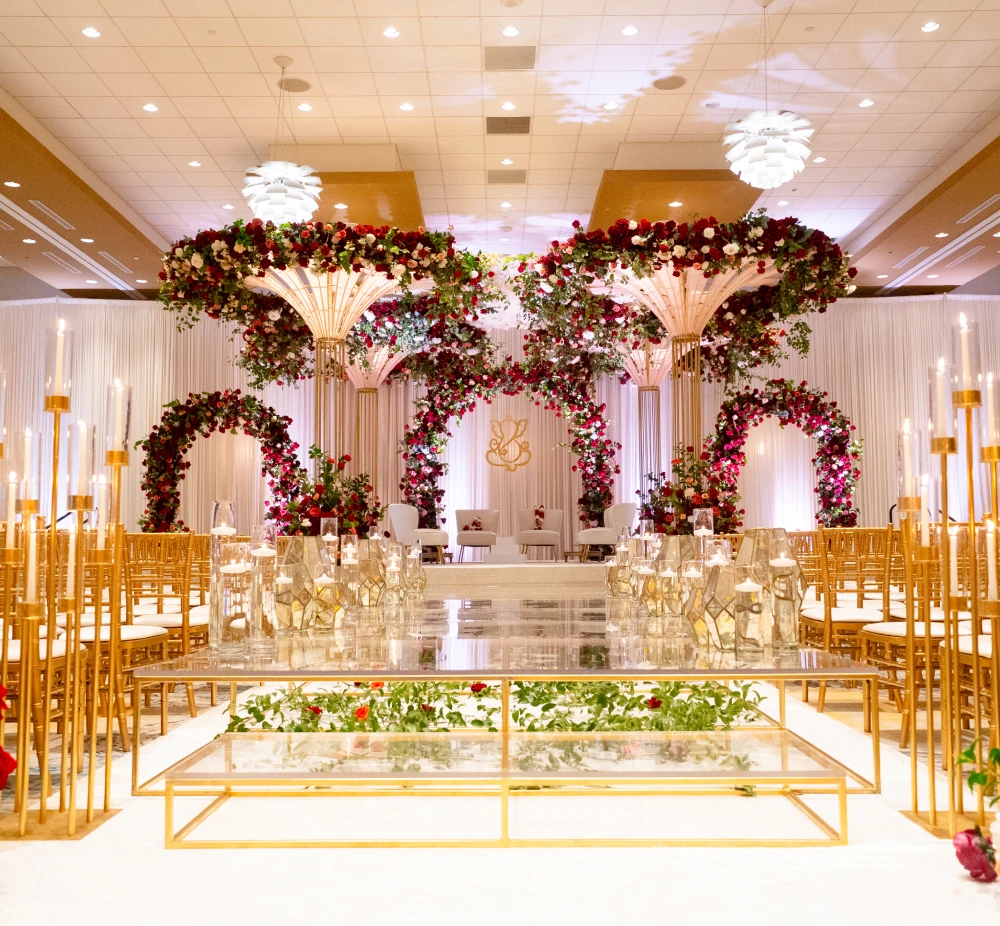
You have 200 Pinterest pins saved. Your mom wants red. Your fiancé wants sage green. And the decorator needs an answer by Friday.
Sound familiar? You are not alone.
Learning how to choose wedding colors for an Indian wedding feels extra tricky. You are not picking colors for one day. You are picking them for a mehndi, a sangeet, a ceremony, and a reception.
Here is the good news. A simple five-step method can sort this out. This guide covers that method, plus color combos, decor matching tips, and mistakes to skip. Grab some chai and let’s get started.
Why Does Color Matter So Much at an Indian Wedding?
Color tells your story. At an Indian wedding, every shade carries meaning, and every event has its own mood.
David’s Bridal’s guide to Indian bridal colors explains that red stands for love and auspicious beginnings. Yellow signals blessings and purification. Green points to prosperity and harmony.
Your palette also ties together outfits, florals, lighting, invitations, and photos. Get it right, and everything looks like one big, happy family.
Plenty of couples are tackling this right now. Pew Research Center estimates that about 4.9 million people in the U.S. identify as Indian, alone or mixed with other origins. No wonder fusion palettes are everywhere.
How Do You Choose a Color Palette for an Indian Wedding?
Follow five steps. Start with your venue, pick an anchor color, add supporting shades, test real samples, and plan by event. Here is how each step works.
Step 1: What Does Your Venue Look Like?
Start here, because you cannot repaint a ballroom. Visit the space and study the carpet, walls, ceiling, and chandeliers.
A neutral ballroom loves bold jewel tones. A garden or lawn loves softer, leafy shades.
Season gives you more clues:
- Fall: burgundy, antique gold, deep orange
- Spring: blush, ivory, light green
- Summer: coral, turquoise, marigold
- Winter: emerald, navy, silver
Expert Tip: Visit at the same time of day as your event. Picture a couple who falls for coral, then finds a red patterned carpet in the banquet hall. Ouch. A 20-minute visit would have saved them.
Step 2: Which Anchor Color Feels Like You?
Pick one hero color you both love. Not a trend. A color you will still enjoy in photos ten years from now.
Family traditions can guide you. David’s Bridal notes that North Indian brides often choose bright reds, while South Indian traditions lean toward deeper burgundy.
Good anchor options include maroon, saffron, emerald, royal blue, and blush.
Ask each other two questions:
- Which color do we both love?
- Which family tradition matters most to us?
Step 3: What Supporting Colors Should You Add?
Add two supporting colors and one accent. Use the 60-30-10 rule. That means 60% main color, 30% secondary color, and 10% accent.
Example: maroon (60%), blush pink (30%), and antique gold (10%).
Metallics are your secret weapon. Gold, copper, and rose gold act like a bridge between colors. They make mixed shades look planned.
Step 4: Have You Tested Real Samples?
Screens lie. A color that looks dusty rose on your phone can turn salmon in person.
Ask vendors for fabric, linen, and flower samples. Then check them in daylight, evening light, and under stage lighting.
Do this before you sign contracts. Add sample requests to your wedding budget checklist so nothing sneaks up on you later.
Step 5: How Do Colors Change by Event?
Use one master palette, then shift the dominant color for each event. Guests feel the connection without seeing the same look four times.
- Mehndi: greens and marigold
- Sangeet: jewel tones and hot pink
- Ceremony: red and gold, or pastel and gold
- Reception: burgundy, navy, or emerald
Repeat one shade or metallic at every event. Think of it as your signature thread.
Which Indian Wedding Color Combinations Work Best?
Red and gold lead the traditional list. Blush, sage, and champagne lead the modern one. Both can look stunning.
What Are the Classic Traditional Combinations?
- Red and gold
- Maroon and antique gold
- Saffron and pink
- Yellow, orange, and marigold
These feel rich, warm, and festive. They also feel timeless, which your future photo albums will appreciate.
What Are the Modern and Fusion Combinations?
- Blush, sage, and champagne gold
- Dusty blue, ivory, and silver
- Emerald, ivory, and rose gold
- Terracotta, cream, and olive
These suit couples who want a softer, editorial vibe. They also work well for blended Indian-Western weddings.
| Palette | Colors | Vibe | Best For |
|---|---|---|---|
| Royal Classic | Red, maroon, gold | Rich, traditional | Ceremonies in ballrooms or temples |
| Garden Pastel | Blush, sage, champagne | Soft, romantic | Daytime and outdoor weddings |
| Jewel Luxe | Emerald, burgundy, antique gold | Bold, glamorous | Evening receptions |
| Sunset Fusion | Terracotta, peach, cream | Warm, earthy | Beach or vineyard venues |
Expert Tip: Check with elders before making white or black your main color. Lashkaraa points out that Indian brides often avoid white because it can signal mourning. AZA Fashions adds that black was traditionally seen as inauspicious at weddings. As a small accent, either may be fine. As the star, have a chat first.
How Do You Match Bridal Outfit and Wedding Decor Colors?
Complement, do not match. The bride should stand out, not blend into the backdrop.
How Do You Coordinate Bridal Lehenga Colors With Wedding Decor?
Picture a bride in Houston wearing a red lehenga in front of a red mandap. In photos, she melts into the background. Awkward.
Now swap in a blush and ivory mandap. Her red pops like a cherry on a sundae.
Take a swatch of the lehenga to your decorator. Ask them to hold it next to the mandap fabric.
What Is the Easiest Mandap Color Coordination?
Keep the mandap inside your palette, but different from the couple’s outfits. Try this:
- Choose mandap fabric one shade lighter or deeper than the bride’s outfit.
- Pull florals from your supporting colors.
- Repeat the accent color in aisle decor and seating covers.
- Add metallic details to tie everything together.
What About the Groom and Family?
Pick a sherwani that complements the bride’s outfit. Ivory, gold, or deep green often work well with red.
For family, suggest a color family instead of strict rules. “Jewel tones” is easier than “wear exactly teal.” Your aunties will thank you.
Which Colors Work for Indoor and Outdoor Venues?
Indoor venues like rich, deep colors. Outdoor venues like soft, natural ones. Light changes everything.
| Venue | Colors That Shine | Watch Out For |
|---|---|---|
| Ballrooms and hotels | Deep red, emerald, gold | Clashing carpets and ceilings |
| Gardens and lawns | Blush, sage, peach | Bright sun washing out pastels |
| Beaches and vineyards | Coral, terracotta, cream | Wind and glare |
Lighting matters indoors. Event company Centric Events suggests amber, champagne, blush, or your wedding colors for uplighting. It advises skipping harsh purples or bright greens unless they fit your style.
Couples debate this constantly. In one WeddingWire forum thread, a bride worried orange uplighting would look too “Halloween.” In another thread, a commenter said amber photographs beautifully.
Rental company RentForEvent adds that warm white uplights are less likely to affect skin tones in photos.
Expert Tip: Ask your lighting team to test uplights against your actual fabrics. Do it before the big day, not during dinner.
What Are the Best Pro Tips, Common Mistakes, and Myths?
5 Pro Tips
- Build a mini mood board before meeting vendors.
- Keep your palette to three or four colors plus metallics.
- Pick one signature color that appears at every event.
- Check how colors look on camera, not just in person.
- Share one palette document with every vendor. If that sounds like herding cats, Indian wedding planning services can keep everyone on the same page.
Common Mistakes
- Too many colors. Seven shades look chaotic, not creative.
- Ignoring the venue. Carpets and ceilings are part of your palette.
- Matching the bride to the mandap. Contrast wins photos.
- Copying Pinterest blindly. Check family traditions first.
- Skipping samples. Screens and real fabrics rarely agree.
Myths vs. Facts
| Myth | Fact |
|---|---|
| Indian weddings must be red and gold. | David’s Bridal notes that soft pinks, coral oranges, and sage greens now appear in contemporary bridal collections. |
| Every event needs a different palette. | One master palette with small shifts feels more cohesive. |
| Modern colors disrespect tradition. | Many couples keep the meaning of red or gold and add softer shades around it. |
Final Thoughts: Your Palette, Your Story
Here is the quick recap. Start with your venue and season. Pick one anchor color. Add two supporting shades and an accent. Test real samples. Then adjust the mix for each event.
There is no single right palette. There is only the one that feels like the two of you.
When your colors click, everything falls into place. Years later, every photo will remind you how happy you were. Now go show that Pinterest board to your decorator.
Frequently Asked Questions
There is no single best color. Red, maroon, gold, emerald, and royal blue are classic picks. Blush, sage, and champagne are popular modern ones. Choose based on your venue, season, and family traditions. Then test samples before you commit.
Use three or four main colors plus metallics. A handy formula is 60% main color, 30% secondary, and 10% accent. This keeps the look polished across the mehndi, sangeet, ceremony, and reception without feeling busy.
Yes. Blush, sage, dusty blue, and champagne work beautifully, especially for daytime or outdoor weddings. Pair pastels with gold or silver metallics for a classic Indian feel. Many couples also keep one traditional shade, like red, as a nod to family.
Use your anchor color for big elements like drapes and the mandap. Use supporting colors for florals and linens. Save the accent for small details. Always test swatches in the venue’s lighting before you finalize anything.
Complement it instead of matching it. A bride in red stands out against blush, ivory, or soft green decor. A matching backdrop can make her blend in on camera. Show your decorator a lehenga swatch to find the right contrast.