Got an invite to your first Indian wedding? Congrats, you’re in for a wild, beautiful ride.
You might be staring at an invitation that lists five different events across three days. That’s normal. Take a breath.
This guide breaks down the entire Indian wedding ceremony timeline, step by step. By the end, you’ll know exactly what happens and when, so you can show up prepared instead of panicked.
How Long Does an Indian Wedding Ceremony Take?
The core wedding ceremony usually runs 2 to 4 hours. But that’s just one piece of a much bigger puzzle.
Most Indian weddings are multi-day events. They often start on a Thursday or Friday and wrap up on Sunday.
Here’s why. Indian weddings aren’t a single “I do” moment like a typical American ceremony. They’re a string of rituals, each with its own meaning, guest list, and vibe.
According to a cost breakdown by Fash, a traditional Indian wedding in the US involves around 300 guests and multiple standalone events, from the Mehndi night to the reception.
So when your friend Priya says “the wedding” is this weekend, she probably means the whole weekend, not just Saturday afternoon.
Indian Wedding Ceremony Timeline: Step-by-Step Overview
Here’s a quick snapshot of the full event order, from the first pre-wedding function to the last goodbye.
| Event | Typical Timing | Duration | What It Is |
|---|---|---|---|
| Roka / Engagement | Weeks to months before | 1-2 hours | Families formally agree to the match |
| Mehndi | 1-2 days before wedding | 3-4 hours | Henna applied to bride’s hands and feet |
| Sangeet | 1 day before wedding | 3-5 hours | Music, dance, family performances |
| Haldi | Morning of or day before | 1-2 hours | Turmeric paste applied for good luck |
| Baraat | Wedding day, late morning | 30-60 minutes | Groom’s dancing procession |
| Main Ceremony | Wedding day | 2-4 hours | Core rituals, vows, and fire ceremony |
| Vidaai | Right after ceremony | 15-30 minutes | Bride’s emotional farewell |
| Reception | Same evening or next day | 3-5 hours | Big party, dinner, dancing |
Keep this table handy. It’s your cheat sheet for the whole weekend.
Pre-Wedding Rituals: The Days Before
Think of these as the opening acts. They build anticipation and bring both families together early.
Roka: The Engagement Ceremony
The Roka happens weeks or even months before the wedding. It’s when both families formally say “yes, this is happening.”
It’s usually small and intimate. Just close family, some sweets, and a lot of happy tears.
Mehndi: The Henna Party
The Mehndi typically happens one or two days before the wedding. An artist applies intricate henna designs to the bride’s hands and feet.
It’s a daytime party. Think bright colors, upbeat music, and finger foods.
Real-life example: My coworker Rachel went to her friend Anjali’s Mehndi and said it felt like a bridal shower crossed with a music festival. She left with henna up to her elbow and no regrets.
Sangeet: The Sing-and-Dance Night
The Sangeet usually falls the evening before the wedding. Both families perform choreographed dances for the couple.
This is the event where cousins rehearse Bollywood routines for weeks. Expect a live DJ, a dance floor, and probably a surprise performance from someone’s uncle.
Haldi: The Turmeric Ritual
The Haldi happens the morning of the wedding, or sometimes the day before. Family members apply a turmeric paste to the couple’s skin.
It’s believed to bless the couple and give them a natural glow before the big day. It’s messy, playful, and very photogenic.
Indian Wedding Ceremony Order: The Main Wedding Day
This is the main event. Here’s the order most Hindu ceremonies follow, though details shift by region and family tradition.
Baraat: The Groom’s Grand Entrance
The Baraat usually kicks off late morning or early afternoon. The groom arrives on a horse, in a car, or even on an elephant, dancing his way in with family and friends.
It’s loud, joyful, and honestly the best photo op of the whole day.
Milni: The Families Meet
Right after the Baraat, the two families formally greet each other. Matching relatives (dad to dad, brother to brother) exchange garlands and hugs.
Var Mala: The Garland Exchange
The couple exchanges flower garlands, symbolizing mutual acceptance. Guests often cheer them on, and friends sometimes playfully lift the bride or groom to make it harder to reach.
Kanyadaan: Giving Away the Bride
The bride’s parents formally place her hand in the groom’s. This ritual carries deep emotional weight and often brings the whole room to tears.
Mangal Phera: The Seven Sacred Steps
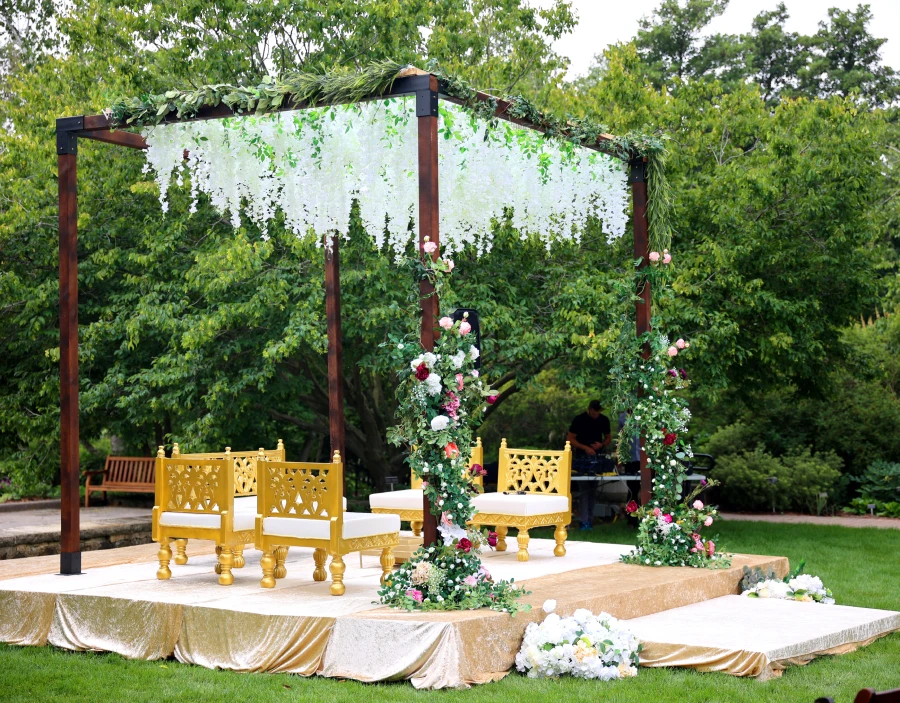
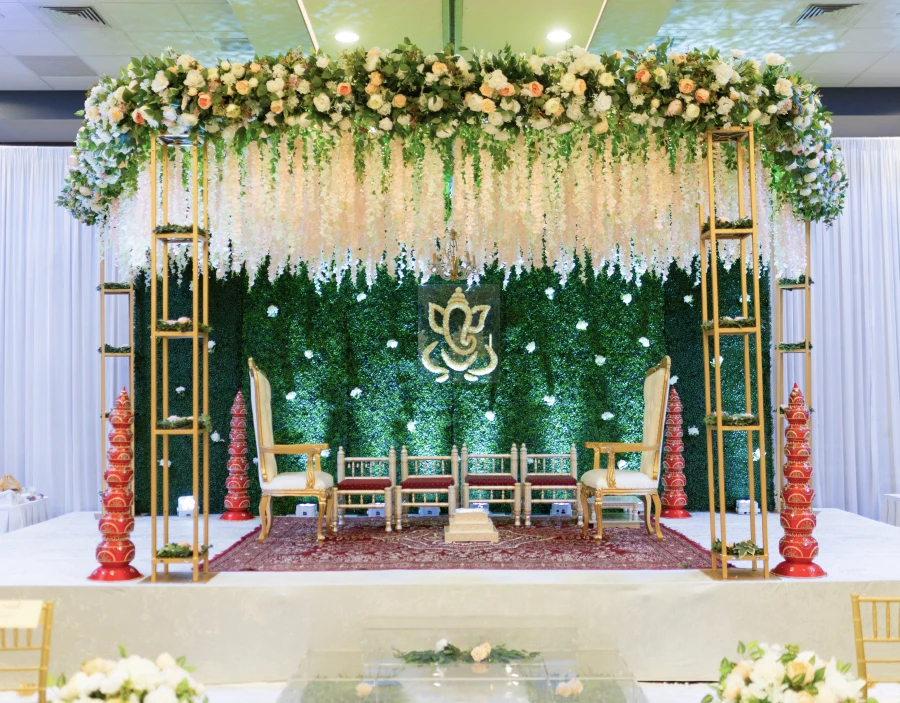
This is the heart of the ceremony. The couple circles a sacred fire seven times, each round representing a specific vow, like loyalty, prosperity, and lasting friendship.
It’s slow, meaningful, and usually guided step by step by a priest.
Sindoor and Mangalsutra: Sealing the Marriage
The groom applies vermillion powder to the bride’s hair part and ties a sacred necklace around her neck. This officially marks the couple as married.
Expert Tip: If you’re a guest, don’t leave during the Mangal Phera thinking it’s a lull in the action. This is actually the legal and spiritual core of the wedding. Stick around.
Post-Wedding Rituals: After “I Do”
Vidaai: The Bride’s Farewell
Right after the ceremony wraps, the bride says goodbye to her family. This is often the most emotional moment of the entire event, so keep tissues handy.
Griha Pravesh: Welcoming the Bride Home
The groom’s family welcomes the bride into her new home, often with a small ritual involving rice or a decorated doorway. This usually happens later that day or the next.
Pro Tips for Guests and Couples Navigating the Timeline
A little insider knowledge goes a long way here.
- Expect flexible start times. Ceremonies rarely start exactly on the printed time. Build in buffer.
- Comfortable shoes matter. You’ll be standing, dancing, and walking a lot across multiple venues.
- Ask before assuming access. Some rituals, like the Roka, are family-only. Others welcome all guests.
- Couples, plan your photo windows. Build 15-20 minutes of buffer between major rituals for photography.
- Coordinate catering timing early. If you’re working with a planner or team like ForUrEvents, lock your ritual schedule first, since Indian wedding catering timing depends heavily on when each ceremony wraps.
Myths vs. Facts About Indian Wedding Timelines
| Myth | Fact |
|---|---|
| All Indian weddings follow the exact same order | Rituals vary widely by religion, region, and family tradition |
| The ceremony itself only takes an hour | Core rituals alone often run 2 to 4 hours |
| Only Hindu weddings have a Baraat | Sikh and Punjabi weddings commonly feature a Baraat too |
| Guests need to attend every single event | Many pre-wedding functions are optional or invite-only |
Common Mistakes to Avoid
- Not confirming the actual start time. Invitation times and real start times can differ by an hour or more.
- Underestimating the full weekend’s length. Treating it like a single-day event leads to scheduling conflicts.
- Skipping research on the specific tradition. Punjabi, South Indian, and Gujarati weddings all differ.
- Wearing the wrong outfit. Bright colors are welcome. Avoid all-white or all-black, which can read as somber in some traditions.
- Assuming vendors understand the full timeline automatically. Always confirm ritual order and timing directly with your planner or caterer.
Wrapping It All Up
An Indian wedding ceremony timeline looks like a lot on paper. In person, it flows.
Each ritual, from the Baraat’s noisy entrance to the quiet vows around the fire, builds toward something meaningful. Once you see the pieces connect, the “why” behind every event becomes clear.
Whether you’re a guest figuring out your outfit or a couple building your own day, use this timeline as your roadmap. The rest is just showing up, staying present, and letting the joyful chaos carry you along.
FAQs About Indian Wedding Ceremony Timelines
The core ceremony typically runs 2 to 4 hours, though the full wedding weekend, including pre and post events, spans 2 to 3 days.
Most Hindu ceremonies follow this order: Baraat, Milni, Var Mala, Kanyadaan, Mangal Phera, then Sindoor and Mangalsutra.
Most Hindu, Sikh, and Punjabi weddings include a Baraat, though South Indian ceremonies sometimes handle the groom’s entrance differently.
Expect flexible start times, multiple events across several days, and ceremonies that run longer than a typical American wedding.
No, they’re optional add-ons to the core ceremony, though most Indian families host at least one or two of them.