Planning a wedding and keep seeing “mandap” and “wedding arch” used like they mean the same thing? You’re not losing your mind. A lot of vendor websites blur these terms together, and it’s confusing when you’re trying to book the right structure for your ceremony.
Here’s the short answer. A mandap is a sacred four-pillared structure rooted in Hindu tradition, built specifically for wedding rituals. A wedding arch is a decorative frame used mostly in Western ceremonies as a pretty backdrop for vows and photos.
They can look similar in photos. But they serve very different purposes. Let’s break it down so you can book the right one for your big day.
What is a Mandap?
A mandap is the ceremonial heart of a Hindu wedding. It’s a four-pillared canopy structure where the couple sits with their priest and family to perform sacred rituals.
This isn’t just decor. The mandap is where the actual wedding happens.
Couples take their saat phere, or seven sacred steps around a holy fire, inside the mandap. Every element inside it has meaning, from the fire (agni) to the seating arrangement for elders.
Key Structural Elements of a Mandap
A traditional mandap usually includes:
- Four pillars, each one symbolic (more on that below)
- A canopy or roof, often draped in fabric or flowers
- A raised platform for the couple and priest
- A central fire pit (havan kund) for the sacred fire ritual
According to a breakdown of Hindu wedding traditions, the four pillars of a mandap represent the four Vedas and the four goals of life: duty, prosperity, pleasure, and liberation. That’s a lot more meaning packed into four poles than your average arch.
What Is a Wedding Arch?
A wedding arch is a decorative structure, usually a single curved or rectangular frame, that couples stand under during a ceremony. Think of it as a fancy picture frame for your “I do” moment.
Wedding arches are hugely popular at American weddings, from backyard ceremonies to beachfront resorts. They’re flexible, they photograph beautifully, and they don’t carry religious weight unless you choose to add that meaning yourself.
You’ll see arches built from wood, metal, florals, balloons, or even neon signs. There’s no rulebook here. That’s actually the whole appeal.
Mandap vs Wedding Arch: Key Differences
Let’s put these two side by side so the differences actually click.
Symbolism & Religious Significance
A mandap is sacred. It’s a ritual space, not just a pretty backdrop. Skipping it in a traditional Hindu wedding isn’t really an option if the family wants a proper religious ceremony.
A wedding arch carries zero required religious meaning. It’s purely aesthetic unless you personalize it with cultural or spiritual touches.
Structure & Design
A mandap has four distinct pillars and usually seats multiple people, including the priest and sometimes parents. It’s built for a full ritual, not just a two-minute vow exchange.
A wedding arch is typically a single frame. It’s built for standing, saying vows, and posing for that perfect photo. Nobody’s sitting under an arch for an hour-long ceremony.
Comparison Table
| Feature | Mandap | Wedding Arch |
|---|---|---|
| Origin | Hindu wedding tradition | Western wedding tradition |
| Purpose | Sacred ritual space | Decorative ceremony backdrop |
| Structure | Four pillars + canopy + platform | Single or double frame |
| Seating | Yes, for couple, priest, family | No, typically stand-only |
| Religious meaning | Required for Hindu rites | Optional/none |
| Typical cost (USA) | $500 to $7,500+ | $150 to $2,000+ |
| Customizable for any culture | Yes, but still ritual-based | Yes, very flexible |
Can You Use a Wedding Arch Instead of a Mandap?
Short answer: sometimes, yes. It depends on how traditional your ceremony needs to be.
Fusion weddings are booming in the US right now, especially among second-generation Indian American couples blending Hindu rituals with Western elements. Some couples use a modern mandap that looks more like an arch, with open sides and minimal draping, while still including the four symbolic pillars.
Others go fully Western for a court-style ceremony and save traditional rituals for a separate event, like an engagement or reception. In that case, an arch works fine because there’s no fire ritual or phere happening under it.
But if your priest requires a proper mandap for kanyadaan, saptapadi, or the sacred fire, an arch simply won’t cut it structurally or spiritually. You genuinely need the pillars and platform.
Expert Tip: If you’re blending traditions, ask your priest first, not your florist. Rituals have specific structural needs (like fire safety clearance and pillar placement), and your officiant will tell you exactly what’s non-negotiable before you fall in love with a Pinterest arch design.
Which Is Better, Mandap or Wedding Arch, for Your Wedding?
There’s no universal “better” here. It depends entirely on your ceremony type, your family’s expectations, and your venue.
Questions to Ask Before Choosing
- Is this a religious Hindu ceremony, or a secular one? Religious ceremonies almost always require a true mandap.
- What does your venue allow? Some indoor venues restrict open flames, which affects mandap fire rituals.
- What’s your budget? Arches are generally cheaper and faster to set up.
- How many people need to sit under the structure? Mandaps accommodate more; arches don’t.
- Is this ceremony being livestreamed or heavily photographed? Both structures photograph well, but mandaps often need more lighting planning due to their size.
A couple in New Jersey I read about on a wedding planning forum shared that they built their own mandap frame from PVC pipe to save money, then had a florist drape it the day before the wedding. That’s a totally legitimate route if you’re handy and want to cut costs without cutting tradition.
Indian Wedding Mandap Ideas & Decoration Trends
Mandap design has come a long way from heavy red-and-gold drapery. Here’s what’s trending in US Hindu weddings right now:
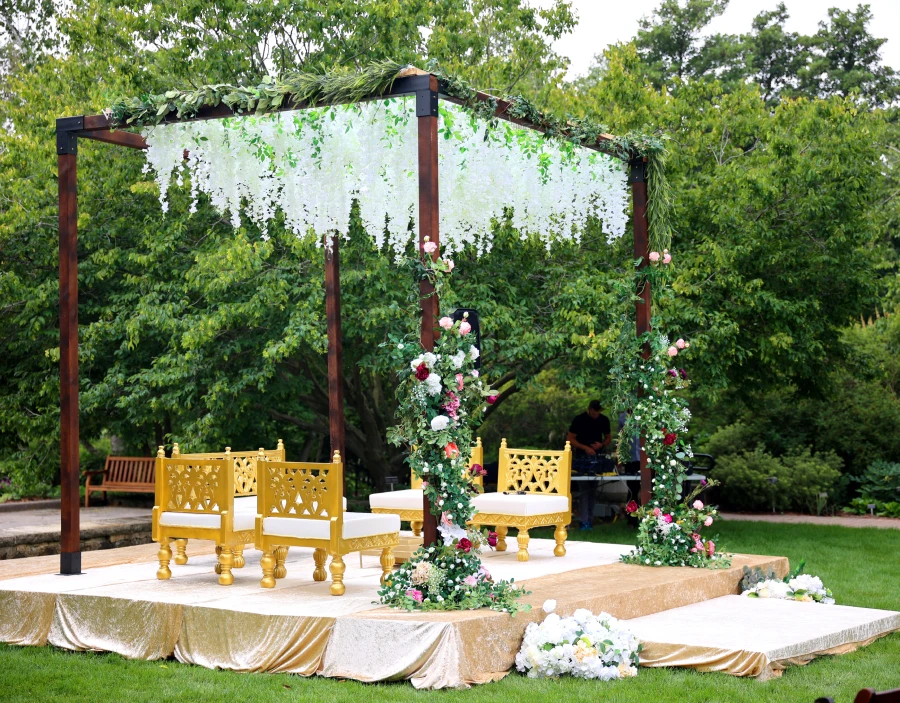
- Minimalist white mandaps with greenery instead of heavy florals
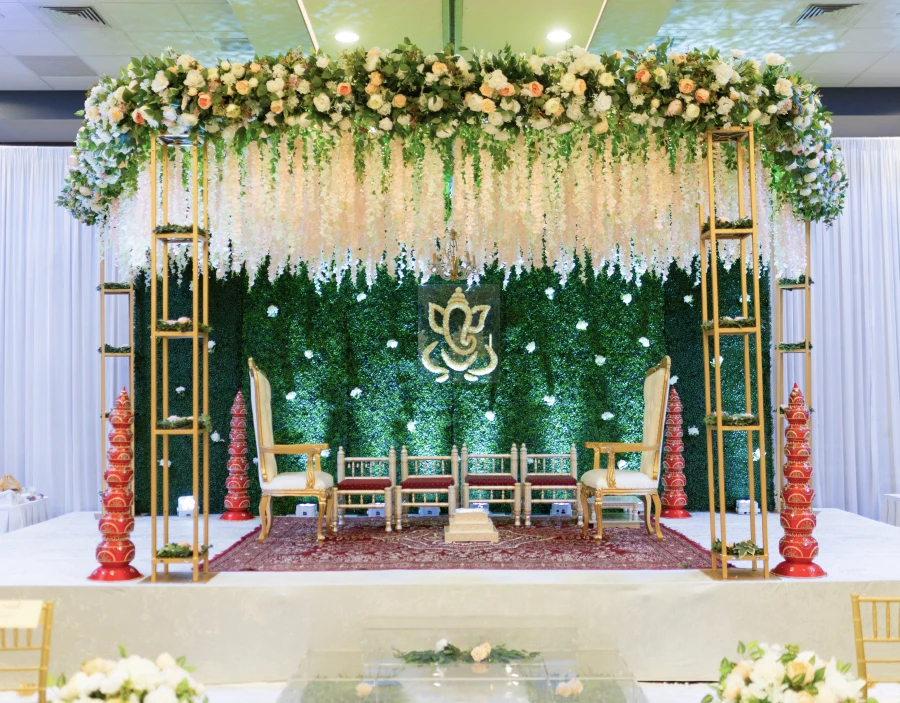
- Floral canopy mandaps with cascading blooms across the roof
- Fusion mandap-arch hybrids with open sides for a modern, airy look
- LED-lit mandaps for evening or indoor ceremonies
- Draped fabric mandaps in jewel tones for a traditional royal feel
If you want a deeper dive into current styles, check out these Modern Mandap Designs for inspiration boards and real setups from recent weddings. Outdoor settings are especially popular right now too, and an Outdoor Mandap Ceremony under natural light photographs beautifully without needing much extra decor.
Pro Tips: Choosing the Right Ceremony Backdrop
A few things I wish more couples knew before booking:
- Measure your venue’s ceiling height first. A tall mandap canopy can look cramped under low ballroom ceilings.
- Ask about wind rating for outdoor structures. Fabric-heavy mandaps and arches both act like sails in strong wind.
- Book your florist and structure vendor together. Miscommunication between the frame rental company and the florist is the number one cause of last-minute decor disasters.
- Budget separately for the frame and the styling. Many vendors quote a bare frame price, then charge extra for draping, florals, and setup labor.
- Think about photo angles early. Walk your ceremony space and picture where your photographer will stand before finalizing structure placement.
Common Mistakes Couples Make
Mistake 1: Assuming any arch will satisfy family expectations.
If your parents or grandparents expect a real mandap ritual, a boho arch won’t feel right, no matter how pretty it looks in photos.
Mistake 2: Underestimating mandap costs.
Real vendor pricing shows mandap frames alone starting around $500 to $800, with full floral packages running $2,500 to $7,500 depending on scale. Add labor, delivery, and teardown, and costs climb fast.
Mistake 3: Forgetting fire code restrictions.
Some indoor venues won’t allow the havan kund’s open flame. Confirm this before you fall in love with an indoor mandap ceremony.
Mistake 4: Booking decor before confirming ritual requirements.
Talk to your priest before you talk to your decorator. It saves you from expensive redos.
Wedding Costs in Context
Wedding budgets have climbed noticeably in recent years. Zola’s research found the average US wedding will cost $36,000 in 2025, up from $33,000 in 2024. Meanwhile, The Knot’s 2025 Real Weddings Study found couples spent an average of $2,700 on flowers alone last year, which matters if your mandap or arch relies heavily on floral styling.
That context matters. Whether you choose a mandap or an arch, decor and florals eat into your budget fast, so plan that line item early.
Conclusion
A mandap and a wedding arch might both frame your “I do” moment, but they come from completely different worlds. The mandap carries centuries of ritual and symbolism. The arch offers flexibility and simplicity.
Neither one is inherently better. The right choice depends on your traditions, your family, and honestly, what feels true to your story.
Whatever you choose, make it a structure that feels like you standing under it, not just something that looked good on Pinterest.
FAQs
A mandap is a sacred four-pillared structure used for Hindu wedding rituals, while a wedding arch is a decorative frame used mainly as a photo-friendly ceremony backdrop with no required religious meaning.
Only for non-ritual portions of the ceremony. If your priest requires sacred fire rituals or seating for family members, you’ll need a true mandap structure instead.
Traditionally yes, since it’s rooted in Hindu ritual, but many South Asian and fusion weddings adapt mandap styles for cultural celebration even without a full religious ceremony.
Mandap frames typically start around $500 to $800, with full decorated packages ranging from $2,500 to over $7,500. Wedding arches are generally cheaper, often between $150 and $2,000 depending on materials and florals.
Many fusion couples use a hybrid: a modern open-sided mandap for the ritual portion, then a simpler arch-style setup for a secular reception or photo backdrop later in the day.