By ForUrEvents. Rituals vary by region, family, and priest, so always confirm details with your own family.
Picture this. You’re at your first Indian wedding in Houston. Everyone points at a gorgeous, flower-covered structure and says, “The ceremony happens under the mandap.”
You nod like you totally get it. Inside, your brain is asking, “Is that a stage? A fancy arch? Why does everyone treat it like the main character?”
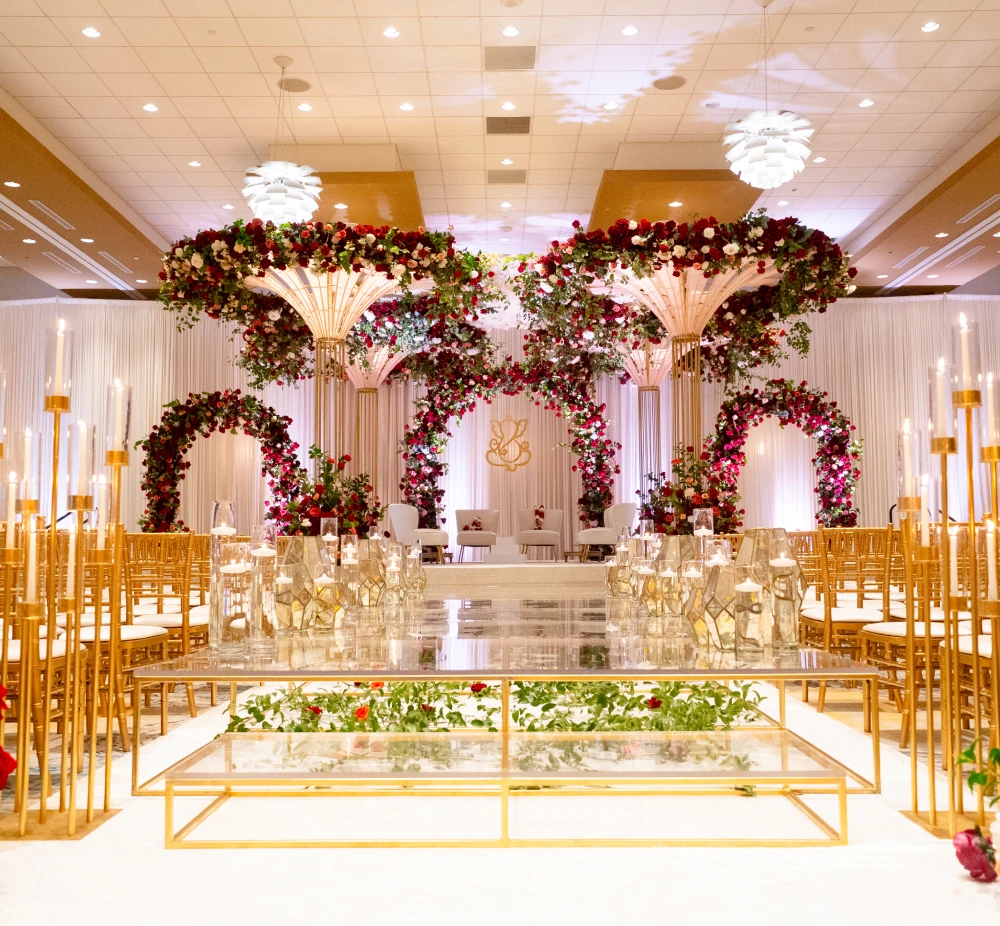
So, what is a mandap? It’s the decorated, canopy-covered platform where a Hindu wedding ceremony takes place. The couple, the priest, and close family sit beneath it for the main rituals.
You’ll see more of them soon. Pew Research Center estimates about 4.9 million people in the U.S. identify as Indian. A Pew survey snapshot found 48% of Indian Americans identify as Hindu.
More weddings means more mandaps and more curious guests. No Sanskrit degree required.
This guide covers the meaning, the four pillars, what happens underneath, and mistakes to avoid. Grab some chai.
What Is a Mandap? A Simple Definition
A mandap is a temporary, canopied pavilion built for a Hindu or Jain wedding, usually held up by four pillars. Wikipedia’s entry on the wedding mandapa says the main ceremonies take place under it.
Think of it as a pop-up temple. It stands for one day and holds the most important moments.
Most mandaps include:
- A raised or ground-level platform
- Four pillars and a canopy on top
- Seats for the couple and the priest
- A small sacred fire in a havan kund
- Space for parents or close relatives
You may also hear vivah mandap or kalyana mandapa. Same idea, different names.
Mandap Meaning and Origin
The mandap meaning is simple. It comes from Sanskrit and points to a pavilion or open hall.
Pavilions like this have long stood beside Hindu temples. Wikipedia notes they were used to mark the weddings of deities such as Rama and Sita.
Early Vedic weddings centered on a sacred fire. Over time, the space around that fire became more structured and decorated. Today’s mandap is the glam descendant.
Why Do Hindu Weddings Take Place Under a Mandap?
Hindu weddings take place under a mandap because it creates a sacred, focused space for the vows. It turns an ordinary ballroom into a ritual space. Think of it as a quiet room inside a loud party.
The sacred fire, called Agni, sits at the center. In Hindu tradition, the fire acts as a witness to the couple’s promises. The mandap frames that fire.
It also stands for the home the couple will build. Bridal Guide notes the Jewish chuppah symbolizes the couple’s new home. It describes the mandap as representing four goals of a fulfilled life.
The Purpose of a Mandap in an Indian Wedding
The purpose of a mandap in an Indian wedding comes down to four jobs:
- Sacred space. It marks where the ritual begins and ends.
- Focal point. Guests know exactly where to look.
- Symbol of home. It represents the household the couple is starting.
- Blessing zone. Parents and elders step in to bless the couple.
Mandap vs. Wedding Arch vs. Stage
This mix-up is super common. A mandap is for rituals. An arch is mostly for looks. A stage is for the party.
The Knot quotes a planner who says an arch can work for prayers. The rituals, though, begin once the couple sits under a mandap.
Here’s the quick Mandap vs Wedding Arch breakdown:
| Feature | Mandap | Wedding Arch | Reception Stage |
|---|---|---|---|
| Main purpose | Hosts Hindu ritual | Photo backdrop or entry | Showcases couple at party |
| Seating | Couple, priest, family | Usually standing | Sweetheart seats |
| Sacred fire | Often included | No | No |
| Meaning | Deeply symbolic | Mostly decorative | Mostly social |
Expert Tip: Anyone stepping onto the mandap usually removes their shoes. The Knot’s planner source suggests telling the wedding party at rehearsal, especially friends new to the tradition. Nobody wants to learn this mid-ceremony.
What Are the Four Pillars of a Hindu Wedding Mandap?
The four pillars are the posts at each corner that hold up the canopy. They’re commonly explained as symbols of life’s goals, family, and stability. Meanings vary by region and family.
Traditional builds use banana stalks, bamboo, wood, and mango leaves. Today you’ll also see metal, acrylic, and draped fabric frames.
Both work. The ritual matters more than the material.
What Do the Four Pillars Symbolize?
Here are the most common readings:
- Four goals of life: duty (dharma), prosperity (artha), love (kama), and liberation (moksha).
- Four parents: the couple’s mothers and fathers, whose support holds up the new home.
- Stability: four corners, one strong foundation.
Your family may follow a different custom. Ask an elder or your priest what applies to you.
What Is the Significance of the Mandap in Hindu Marriage?
The significance of the mandap in Hindu marriage works on three levels: spiritual, cultural, and personal. It’s where two people become a couple, and two families become one.
Spiritually, it’s a purified space with the fire as witness. Culturally, it carries traditions passed down through generations. Personally, it’s the threshold moment.
Picture Anjali and Dave in New Jersey. Dave grew up in a Catholic family and had never seen a Hindu ceremony. Halfway through the pheras, his nerves vanished.
That’s a common feeling. The day suddenly feels real once you’re sitting under the canopy.
What Happens Under the Mandap? A Step-by-Step Walkthrough
The ceremony follows a general order, though details differ by community. Many couples plan for roughly an hour to 90 minutes, and some run longer. Here’s the quick view:
| Step | Ritual | What It Means |
|---|---|---|
| 1 | Baraat, Milni, entry | Welcomes the families |
| 2 | Ganesh Puja | Removes obstacles |
| 3 | Kanyadaan, Hast Milap | Blessing and joining hands |
| 4 | Mangal Pheras | Walking around the sacred fire |
| 5 | Saptapadi | Seven steps, seven vows |
| 6 | Sindoor, Mangalsutra | Symbols of marriage |
Arrival and Welcome (Baraat and Milni)
The groom’s side arrives with music and dancing. The families meet in a greeting called Milni. Then the bride enters, and the couple often exchanges garlands.
Ganesh Puja and Blessings
The priest invokes Lord Ganesh, known as the remover of obstacles. Think of it as a prayer for smooth sailing.
Kanyadaan and Hast Milap
In Kanyadaan, the bride’s parents give their blessing. In Hast Milap, the couple’s hands are joined. Many parents cry here. Keep tissues handy.
Mangal Pheras (Circling the Sacred Fire)
The couple walks around the fire. Some families do four rounds, and others do seven. Each round is commonly tied to a life goal or a promise.
Saptapadi (The Seven Steps)
The couple takes seven steps together. Each step carries a vow about things like nourishment, strength, and loyalty. It’s often the emotional peak.
Sindoor, Mangalsutra, and Closing Blessings
Many ceremonies close with sindoor and a mangalsutra, along with blessings from elders. Customs here vary a lot by region.
What Types of Mandaps and Decoration Ideas Exist?
Mandaps range from classic floral builds to sleek, modern frames. The right one fits your venue, your family’s customs, and your budget.
Traditional vs. Modern Mandap Styles
Traditional mandaps use carved wood, marigolds, and rich silks. Looking at Modern Mandap Designs, you’ll find acrylic frames, hanging florals, and minimalist drapes.
| Style | Pros | Cons |
|---|---|---|
| Traditional | Deep cultural feel, warm look | Heavier, takes longer to set up |
| Modern | Light, flexible, venue-friendly | May feel less classic |
Mandap Decoration Ideas
Here are some mandap decoration ideas that work well in the U.S.:
- Marigold and rose garlands
- Hanging crystals or floral chandeliers
- Flowing fabric draping in soft colors
- Regional themes, like South Indian or Gujarati styles
- Outdoor garden mandaps with greenery
- DIY touches, like a family hand-strung carnation curtain that represented a temple
Want fresh inspiration? Check the Latest Mandap Decor Trends for color and style ideas.
Mandap Options for U.S. Weddings
U.S. venues bring their own quirks. Ceiling height, wind outdoors, and open-flame rules all matter.
The U.S. Fire Administration advises keeping candles at least 12 inches from anything that burns. Apply that thinking to your sacred fire and decor.
Ask your venue directly about havan rules. A Professional Wedding Planner can handle that call for you.
Pro Tips, Common Mistakes, and Myths vs. Facts
Pro Tips for Planning Around the Mandap
- Walk through the venue to check sightlines for guests.
- Seat elders where they can see and hear.
- Share the ceremony flow with your photographer.
- Ask your priest what items go under the mandap before finalizing the layout.
- Print a simple ceremony guide for guests new to the traditions.
Expert Tip: Ask your priest for a ritual checklist before you lock in the decor. Many layout headaches come from adding the fire kund last.
Common Mistakes to Avoid
Imagine a couple in Atlanta who booked a stunning, compact mandap. The priest, the couple, and both sets of parents didn’t fit. Ouch.
Watch for these slip-ups:
- Building the mandap too small
- Blocking guests’ view with tall decor
- Ignoring smoke and ventilation indoors
- Treating it as pure decor and forgetting ritual needs
Mandap Myths vs. Facts
| Myth | Fact |
|---|---|
| A mandap is just a stage. | It’s a sacred ritual space. |
| Every mandap looks the same. | Designs vary widely by region and family. |
| Bigger is better. | Meaning comes from the ritual, not the size. |
Final Thoughts
So, what is a mandap? It’s a sacred canopy where a Hindu wedding unfolds, held by four pillars and centered on the fire.
Quick recap:
- It’s a ritual space, not just decor.
- Hindu weddings happen under it for focus, blessing, and symbolism.
- The four pillars carry meanings that vary by family.
- Ritual steps happen in a loose, regional order.
At the end of the day, it’s less about the structure and more about two families coming together. Talk with your family or priest about which traditions matter most to you.
FAQs About the Mandap
It’s the decorated canopy structure where a Hindu wedding ceremony is held. The couple, priest, and close family sit under it for the main rituals.
It creates a sacred, focused space for the rituals and the sacred fire. It also symbolizes the home the couple is about to build.
They’re commonly explained as symbols of life’s goals, family support, and stability. Interpretations vary by tradition, so ask your priest.
Typically the couple, the priest, and close family members. Who steps in depends on the ritual stage.
Many U.S. couples plan for about an hour to 90 minutes. Traditional ceremonies can run longer, depending on the family and priest.